
Hitting the Trails: A Beginner’s Guide to Snowmobiling
Snowmobiling is an exhilarating way to embrace winter’s chill and explore the great outdoors. Whether you’re cruising across open fields, winding through forest trails, or experiencing the thrill of speed, snowmobiling offers endless fun and adventure. If you’re new to the sport and wondering where to start, this guide is for you. We’ll cover everything you need to know, from trail passes and safety courses to exploring Ontario’s incredible OFSC trail system. By the end, you’ll be ready to hit the snow with confidence!
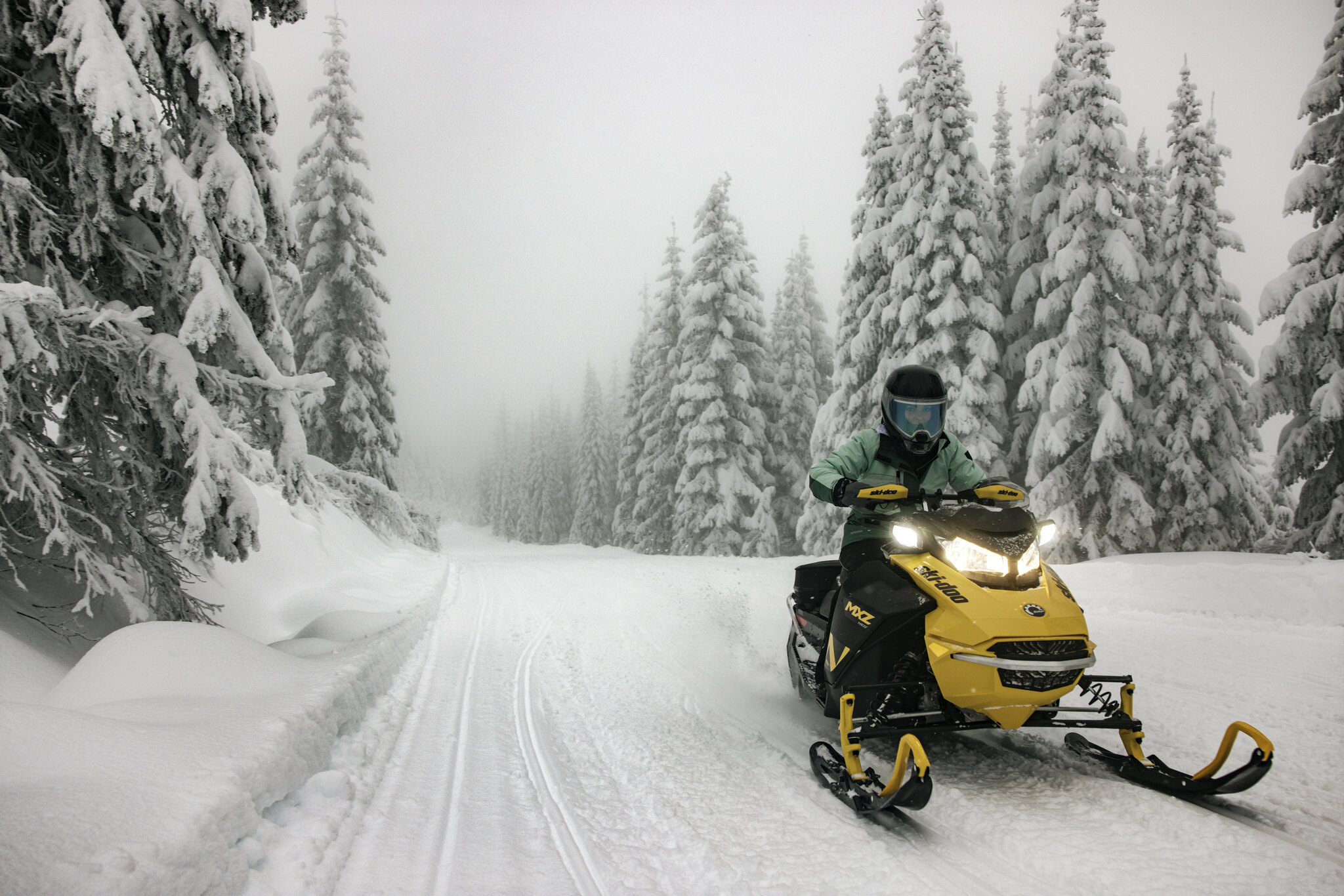
Understanding Snowmobile Trail Permits
Ontario boasts over 30,000 kilometers of groomed snowmobile trails, making it a paradise for riders. Managed by the OFSC, these trails connect towns, scenic wilderness areas, and popular destinations across the province.
Why OFSC Trails are Great for Beginners:
- Well-Marked Routes: Trail signs and maps make navigation easy.
- Variety of Terrains: Choose from open fields, forested paths, or lakeside trails.
- Community Support: Local snowmobile clubs provide trail updates, events, and assistance.
Tips for Your First Ride:
- Plan Ahead: Use the OFSC’s interactive trail guide to map your route. Check it out here.
- Check Trail Conditions: Ensure the trails are open and safe to ride by visiting the OFSC website or contacting local clubs.
- Start Small: Choose a shorter route close to home to build confidence before tackling longer trips.
- Download the BRP Go! App or your one-stop source for connected riding experience. Share rides with friends, map out destinations, turn by turn navigations, connect directly with your Ski-Doo’s Display (if equipped).
Taking a Snowmobile Safety Course
Snowmobiling is thrilling, but safety is essential. Completing a safety course will help you learn the rules of the trails, proper riding techniques, and how to handle emergencies. In Ontario, riders aged 12 and up are required to complete a snowmobile safety course to legally operate a snowmobile on trails.
Recommended Courses:
- Ontario Snowmobile Safety Course: An online course approved by the Ministry of Transportation. Perfect for beginners to learn at their own pace. Get started here.
- In-Person Training: Some local clubs and organizations offer hands-on training sessions during the season.
Bonus: Completing a safety course can also reduce your insurance costs!
What to Wear Snowmobiling
Why Proper Gear Matters
Riding a snowmobile exposes you to cold temperatures, biting wind, and potential snow spray. As speeds increase, the wind chill factor can make it feel significantly colder than the actual temperature. Without the proper attire, you risk discomfort, frostbite, or even hypothermia. Investing in the right gear will help you stay warm and focused on enjoying your ride.
Head-to-Toe Gear Breakdown
- Helmet: A DOT-approved full-face snowmobile helmet is non-negotiable. It protects your head and keeps your face shielded from the cold wind. Many helmets come with built-in visors to prevent fogging and ensure visibility.
- Base Layers: Start with moisture-wicking base layers made from materials like merino wool or synthetic fabrics. These layers pull sweat away from your skin, keeping you dry and preventing chills.
- Mid Layers: Your mid layer provides insulation. Think fleece jackets, wool sweaters, or insulated vests. This layer traps heat while allowing moisture to escape.
- Outer Layers: Your jacket and pants should be waterproof, windproof, and insulated. Look for snowmobile-specific gear that’s designed to withstand the rigors of the sport. Bonus points for gear with built-in vents to help regulate your temperature.
- Gloves: Cold hands can ruin a ride. Choose insulated, waterproof gloves or mittens with good grip. Some snowmobilers opt for gloves with built-in heaters for extra warmth.
- Boots: Snowmobile boots should be insulated, waterproof, and have excellent traction for walking on icy surfaces. Make sure they’re tall enough to keep snow out and roomy enough to accommodate thick socks.
Accessories:
- Neck Warmers or Balaclavas: Keep your neck and face shielded from wind and snow.
- Goggles: Protect your eyes from wind, glare, and snow spray. Opt for goggles with anti-fog lenses.
- Hand Warmers: Disposable hand warmers or heated grips can make a world of difference on colder days.
Common Mistakes to Avoid
- Wearing Cotton: Cotton retains moisture, leaving you cold and uncomfortable. Stick to synthetic or wool materials for all layers.
- Skipping Layers: Overheating might seem like a risk, but layering allows you to adjust your clothing to match conditions.
- Neglecting Protective Gear: Don’t skip on helmets or goggles, even for shorter rides.
Pro Tips for Comfort and Safety
- Invest in Quality Gear: High-quality snowmobile gear can last for years and significantly enhance your comfort and safety.
- Test Your Gear: Try on everything before your ride to ensure it fits properly and allows freedom of movement.
- Use Heated Accessories: Heated gloves, socks, or grips can help you stay comfortable on longer rides.
- Pack Extras: Bring spare gloves, socks, and a hat in case your gear gets wet.
Maintenance
Just like your on-road vehicle, your snowmobile needs proper and regular maintenance. Regularly check your snowmobile’s track, brakes, and fluids. Use your owner's manual for manufacturer's recommendations on scheduled maintenance.
If you are unsure about any regular maintenance or want to book an appointment, contact our service department.
Helpful Links
- Never get lost again with the what3words app
- Ontario Federation of Snowmobile Clubs
- Motorized Snow Vehicles Act of Ontario
-
Apps for Outdoor Adventures - Maps for off-road adventuring
ENOJY THE SNOW!
Snowmobiling is a fantastic way to make the most of winter and explore Ontario’s stunning landscapes. By securing your trail permit, completing a safety course, and planning your first ride on the OFSC trail system, you’ll be well on your way to enjoying a safe and unforgettable snowmobiling adventure. So bundle up, rev up your sled, and get ready to create incredible winter memories. See you on the trails!

.jpg)
.png)


