
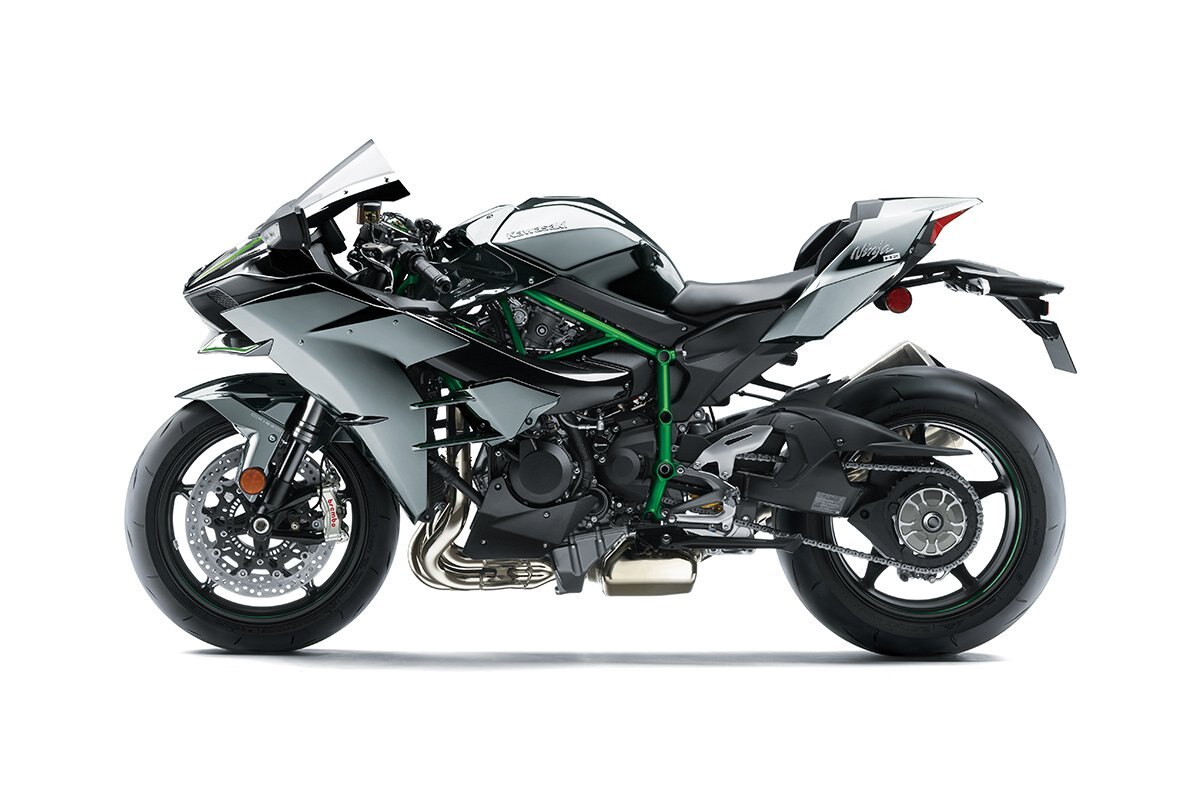
2024 Kawasaki NINJA H2


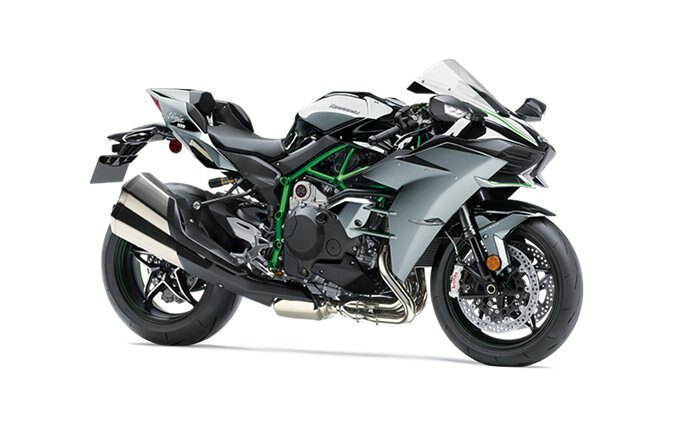
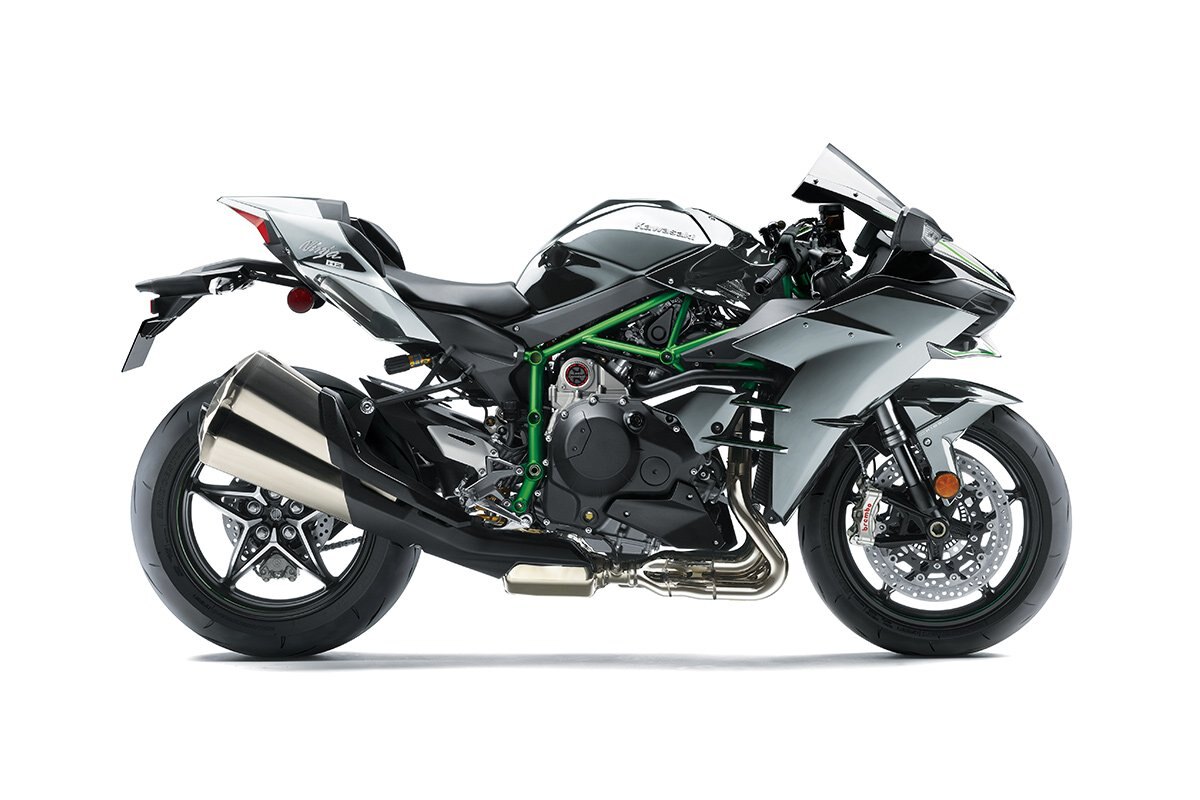
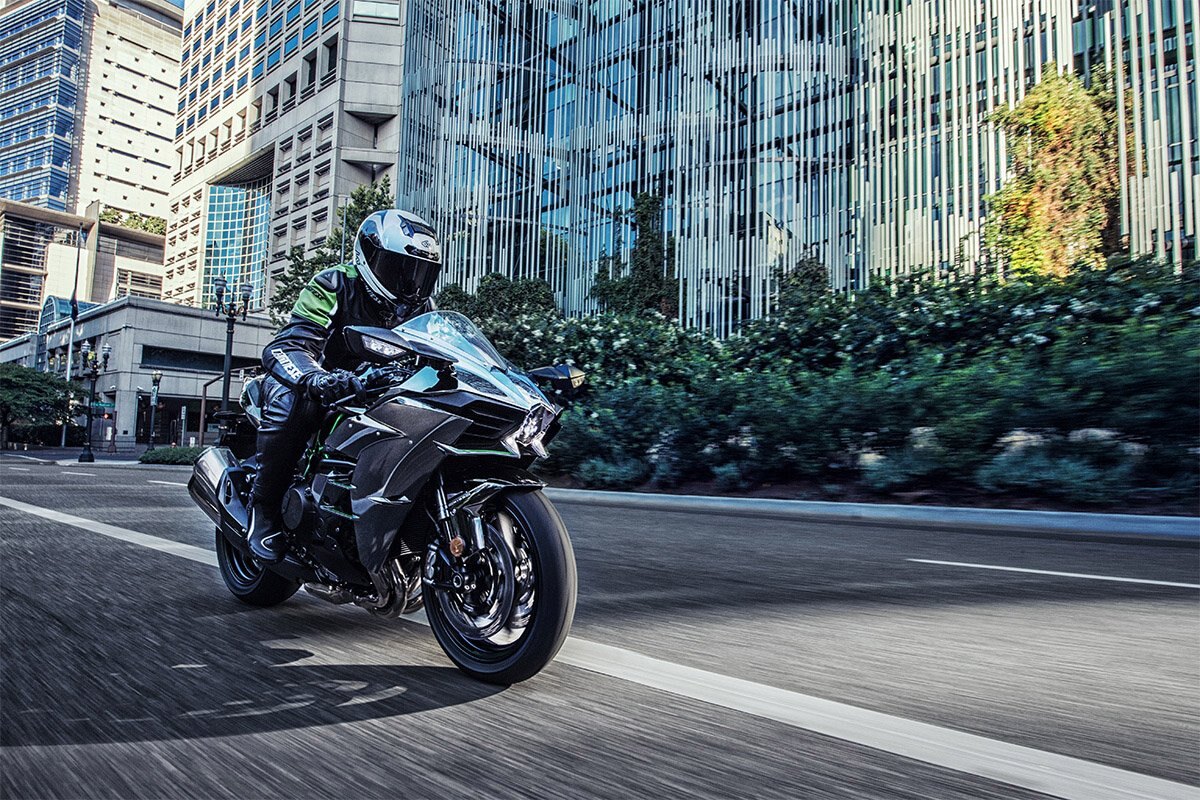
| The Ninja H2 and Ninja H2 Carbon bring the mind-bending power of Kawasaki's supercharged hypersport machine to the street. Boasting a powerful 998cc in-line four supercharged engine, state-of-the-art electronics, and the latest Brembo brakes, the Ninja H2 and Ninja H2 Carbon amount to pure performance on the road. |
FEATURING
|
ADDITIONAL VEHICLE FEATURES
|
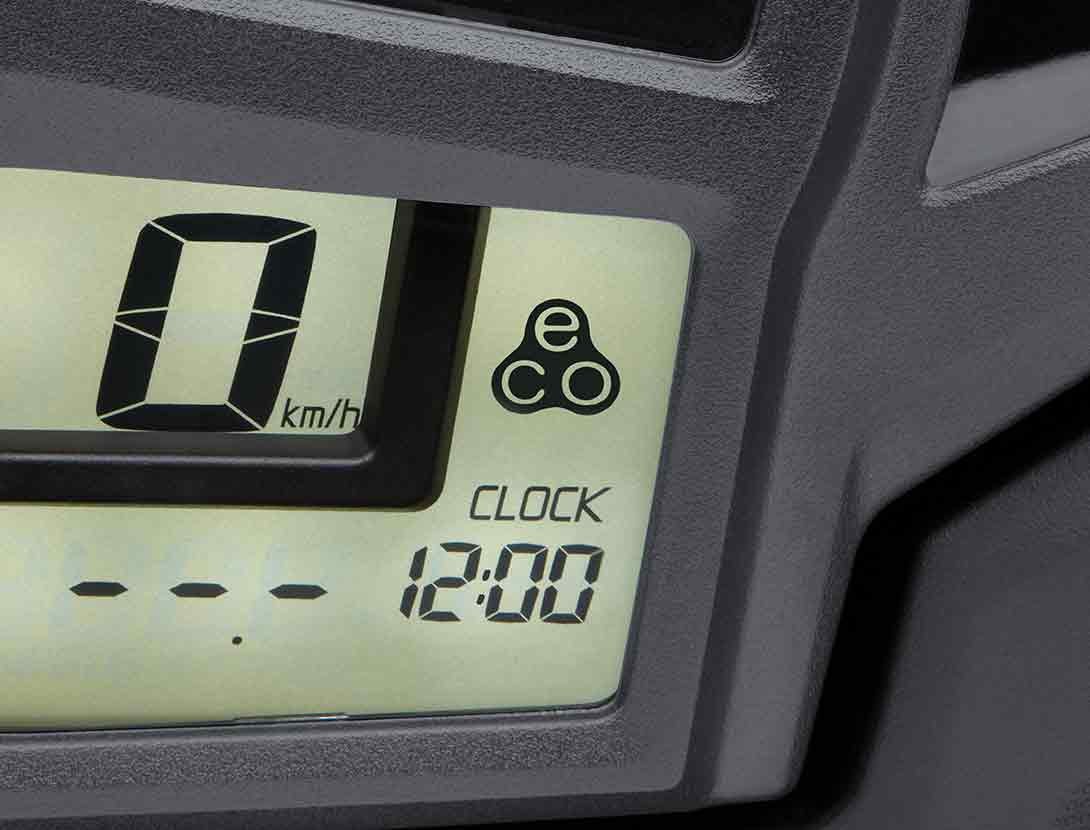
ECONOMICAL RIDING INDICATORUsing high-precision electronic control for engine management, Kawasaki models can achieve a high level of fuel efficiency. However, fuel consumption is greatly affected by throttle use, gear selection, and other elements under the rider's control. The Economical Riding Indicator is a function that indicates when current riding conditions are consuming a low amount of fuel. The system continuously monitors fuel consumption, regardless of vehicle speed, engine speed, throttle position and other riding conditions. When fuel consumption is low for a given speed (i.e. fuel efficiency is high), an "ECO" mark appears on the instrument panel's LCD screen. By riding so that the "ECO" mark remains on, fuel consumption can be reduced. While effective vehicle speed and engine speed may vary by model, paying attention to conditions that cause the "ECO" mark to appear can help riders improve their fuel efficiency – a handy way to increase cruising range. Further, keeping fuel consumption low also helps minimize negative impact on the environment. |
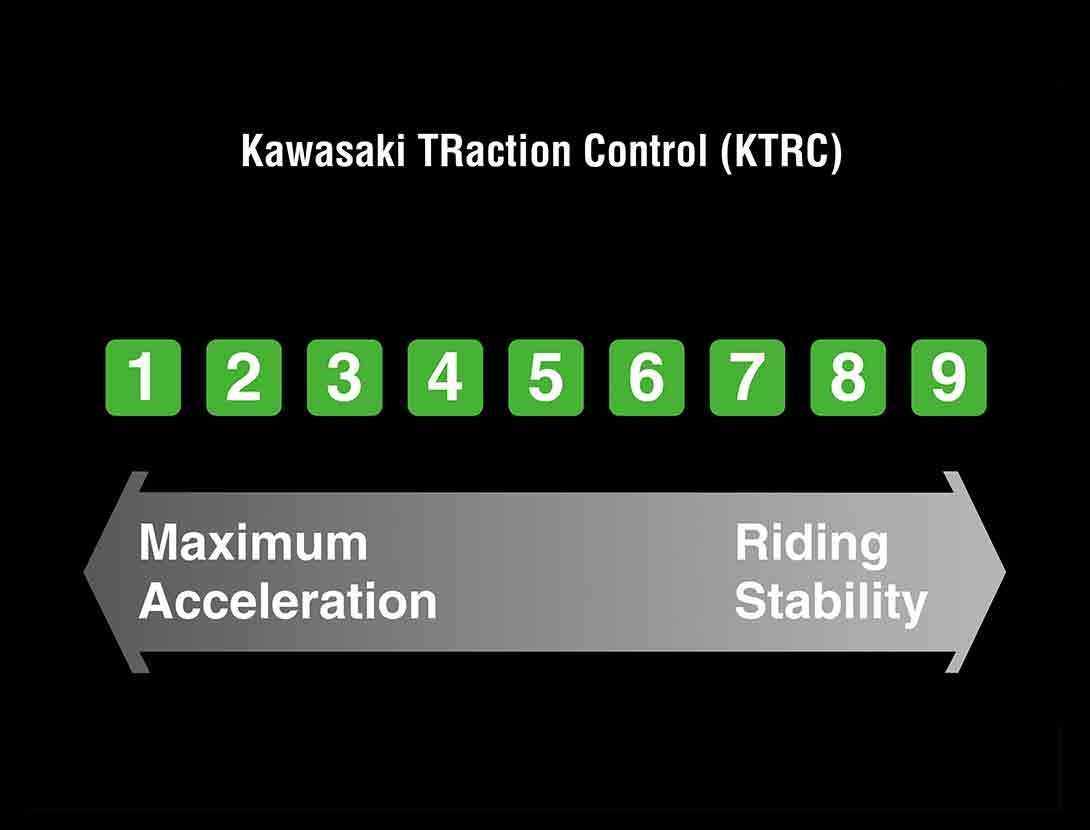
KTRC (KAWASAKI TRACTION CONTROL)
|
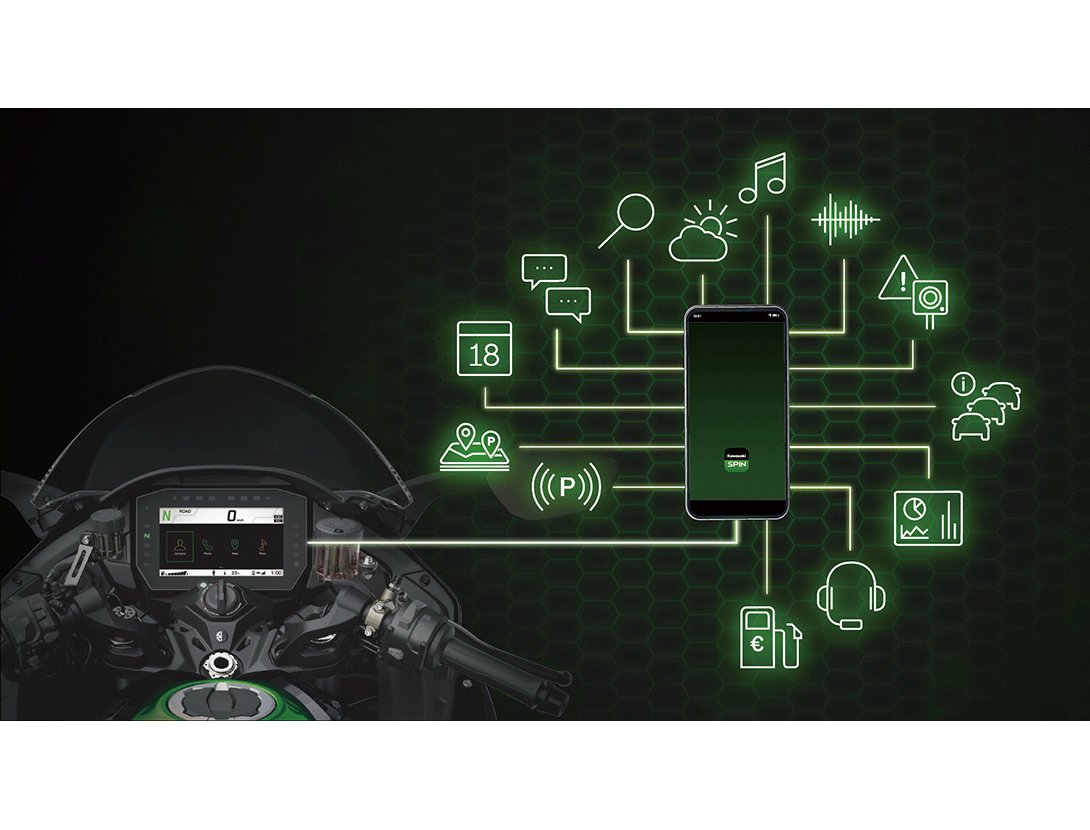
SMARTPHONE CONNECTIVITY
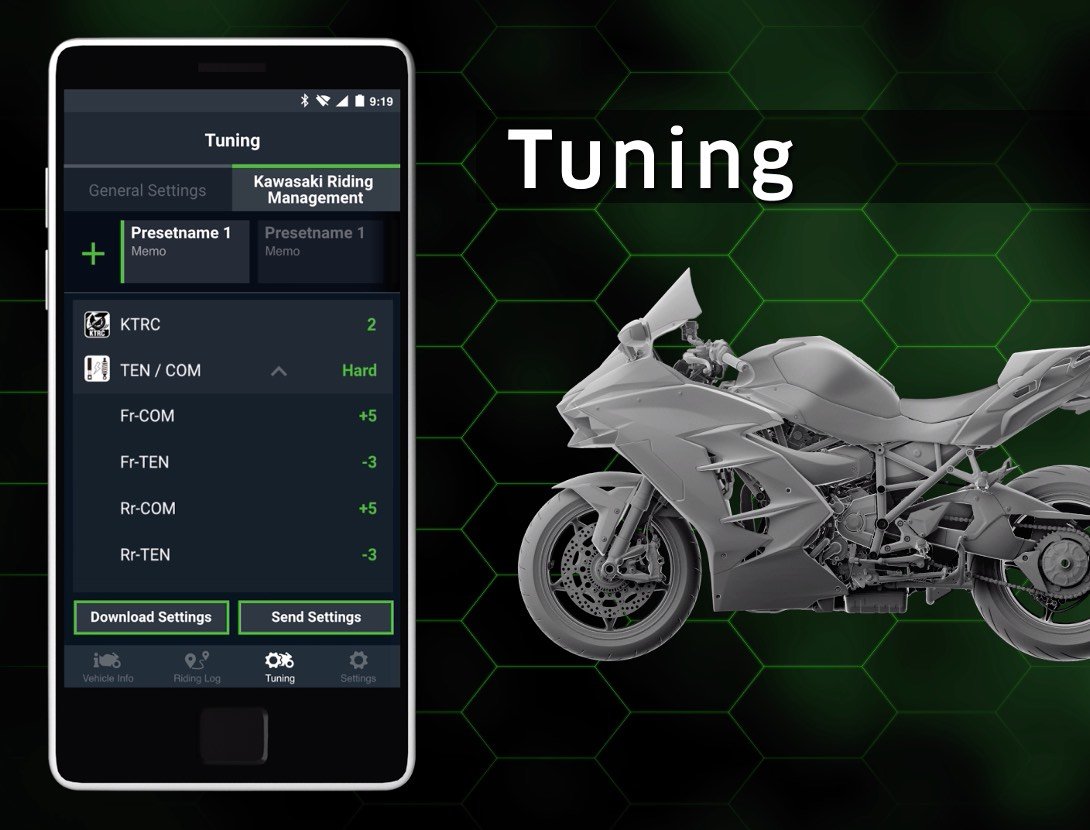
Clever technology enables riders to connect to their motorcycle wirelessly. Using the smartphone application “RIDEOLOGY THE APP,” a number of instrument functions can be accessed, contributing to an enhanced motorcycling experience. Vehicle information (such as the odometer, fuel gauge, maintenance schedule, etc) can be viewed on the smartphone. Riding logs (varies by model, but may include GPS route, gear position, rpm, and other information) can be viewed on the smartphone. When connected, telephone (call, mail) notices are displayed on the instrument panel. Riders can also make changes to their motorcycle’s instrument display settings (preferred units, clock and date setting, etc) via the smartphone. And on certain models, it is even possible to check and adjust vehicle settings (such as Rider Mode, electronic rider support features, and payload settings) using the smartphone. |
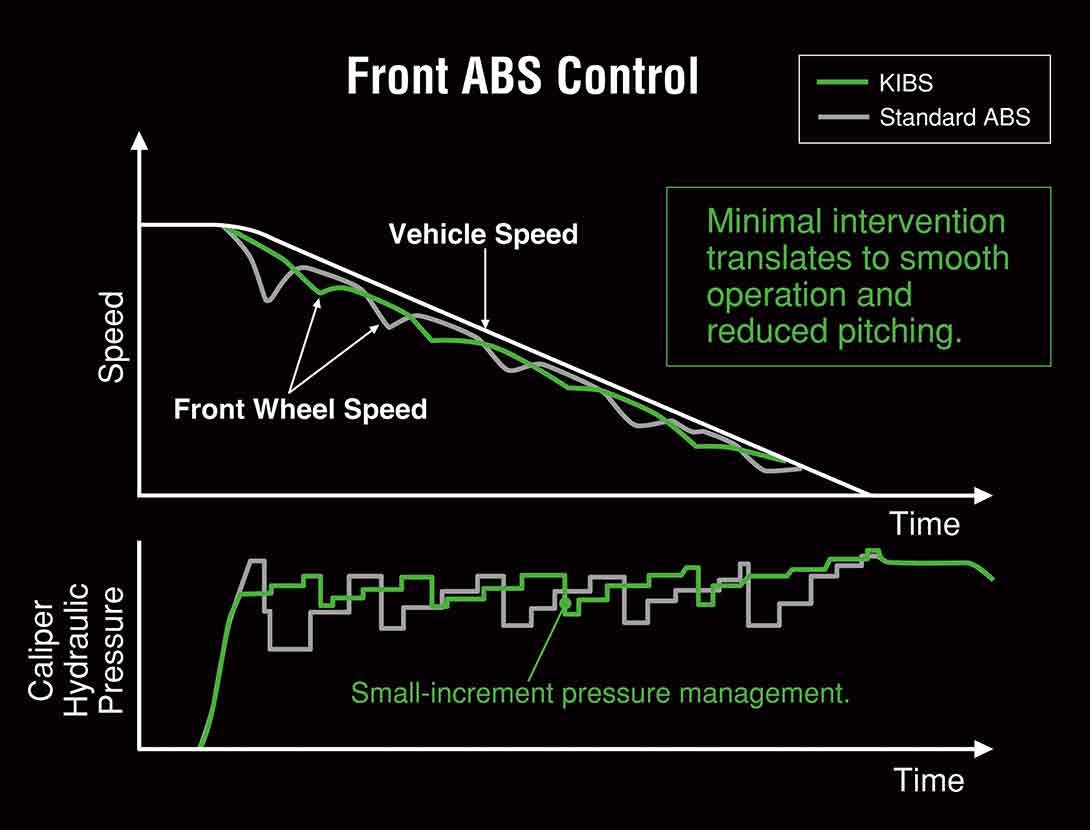
ABS (ANTI-LOCK BRAKE SYSTEM)Kawasaki ABS systems use front and rear wheel sensors to constantly monitor wheel speed. Should information from either of the sensors indicate that wheel lock has occurred, the ABS ECU directs the pump in the ABS unit to modulate brake fluid pressure (releasing and reapplying pressure so that traction can be regained) until normal operation resumes. ABS offers rider reassurance that contributes to greater riding enjoyment. |
ASSIST & SLIPPER CLUTCH
|
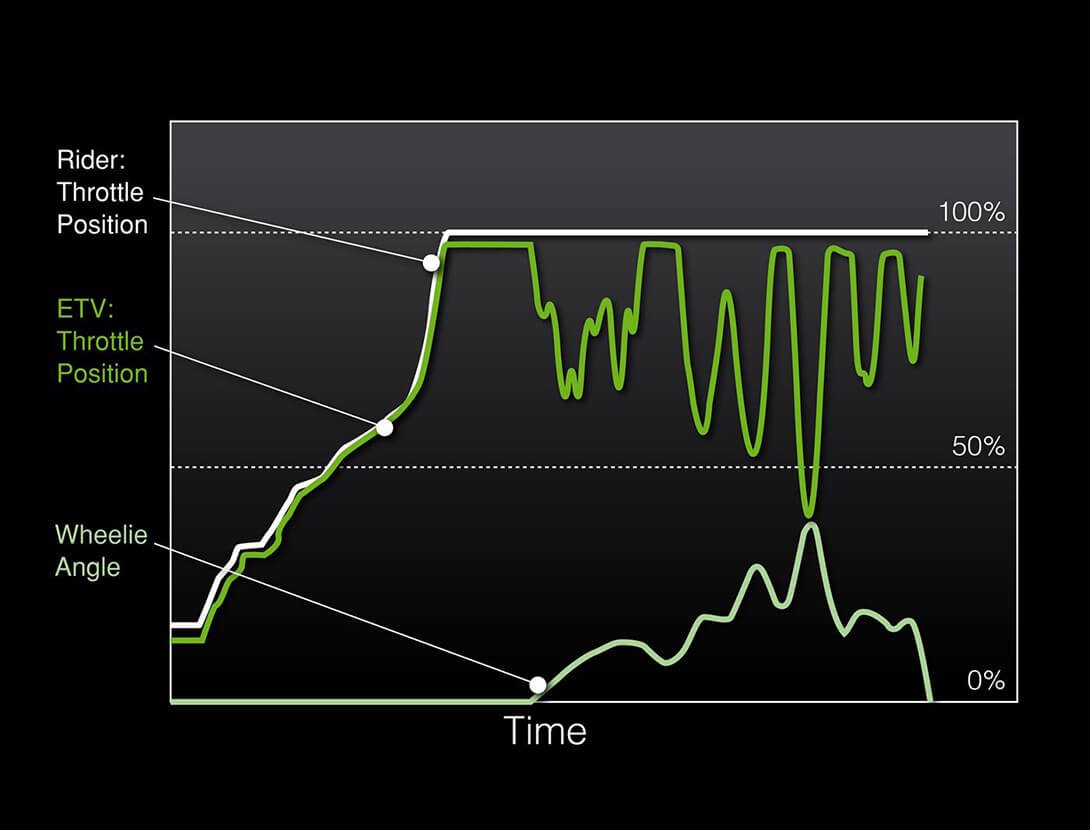
ELECTRONIC THROTTLE VALVES
|
KAWASAKI ENGINE BRAKE CONTROLThe Kawasaki Engine Brake Control system allows riders to select the amount of engine braking they prefer. When the system is activated, the engine braking effect is reduced, providing less interference when riding on the track. |
KCMF (KAWASAKI CORNERING MANAGEMENT FUNCTION)
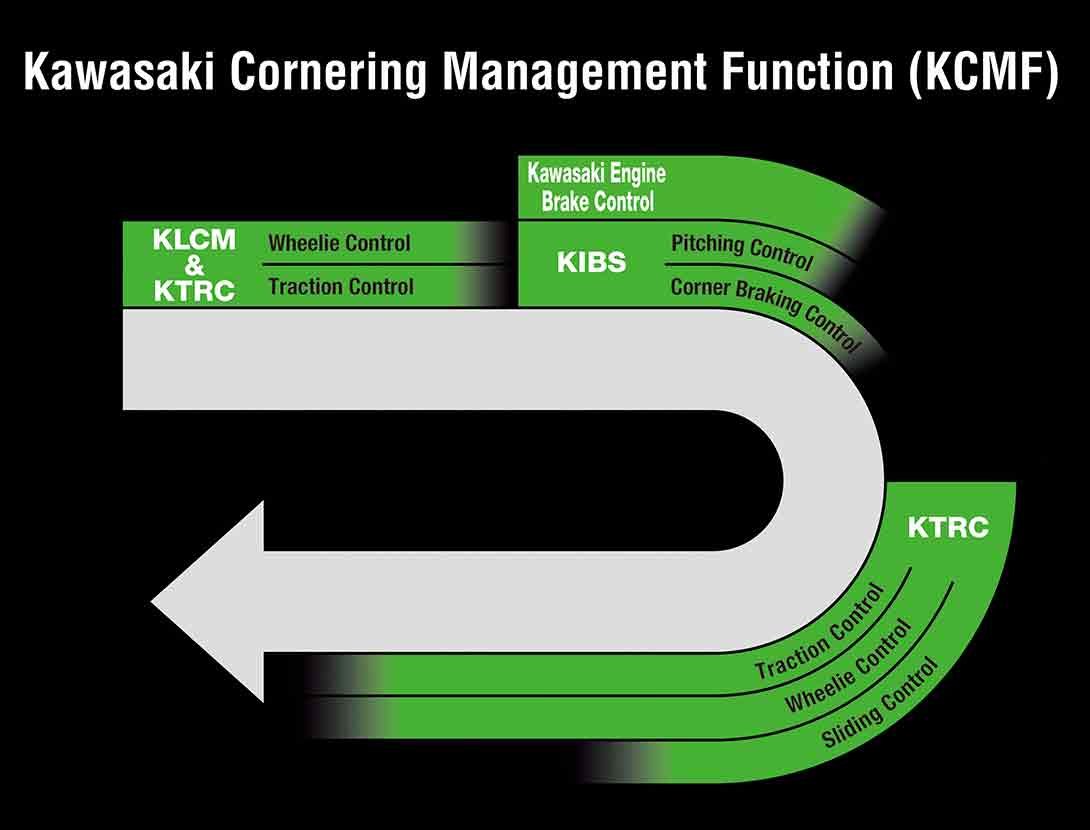
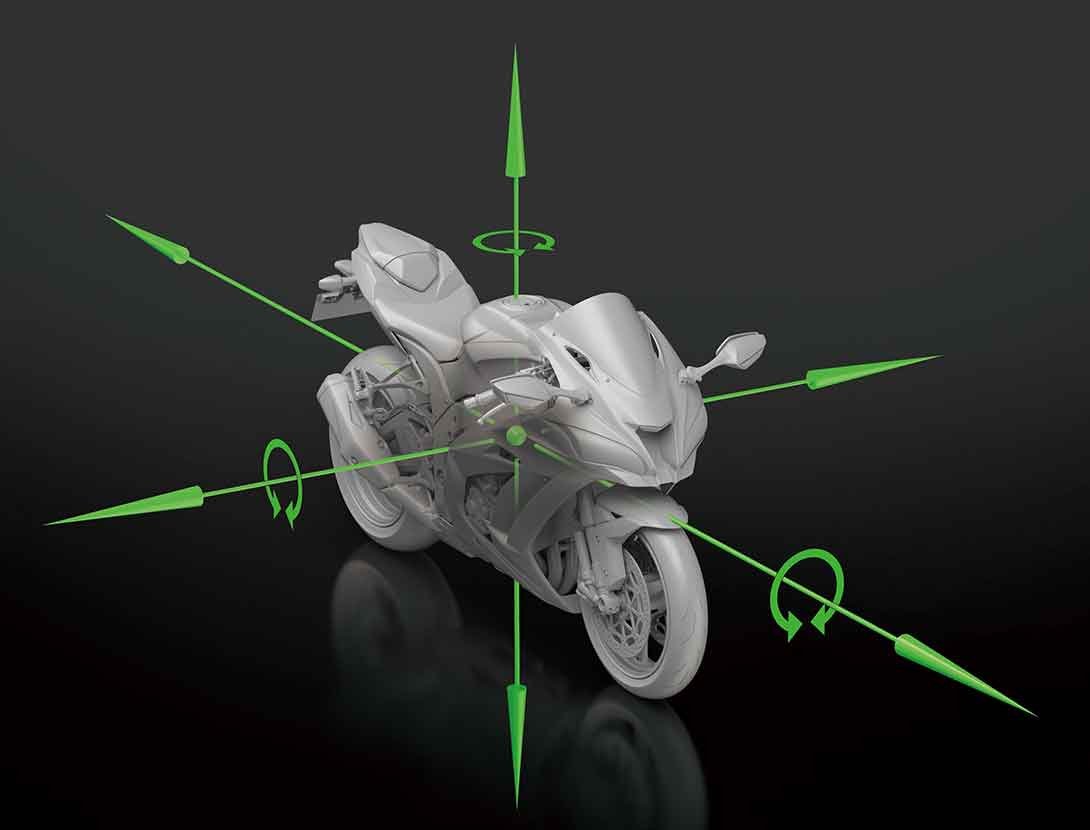
Using the latest evolution of Kawasaki’s advanced modeling software and feedback from a compact IMU (Inertial Measurement Unit) that gives an even clearer real-time picture of chassis orientation, KCMF monitors engine and chassis parameters throughout the corner – from entry, through the apex, to corner exit – modulating brake force and engine power to facilitate smooth transition from acceleration to braking and back again, and to assist riders in tracing their intended line through the corner. The systems that KCMF oversees vary by model, but may include: |
KLCM (KAWASAKI LAUNCH CONTROL MODE)
Designed to assist riders by optimizing acceleration from a stop, KLCM electronically manages engine output to minimize wheel spin when moving off. With the clutch lever pulled in and the system activated, engine speed is limited to a determined speed while the rider holds the throttle open. Once the rider releases the clutch lever to engage the clutch, engine speed is allowed to increase, but power is regulated to minimize wheel spin and help keep the front wheel on the ground. The system disengages automatically once a predetermined speed has been reached, or when the rider shifts into third gear. Depending on the model, riders can choose from multiple modes, each offering a progressively greater level of intrusion. |
KQS (KAWASAKI QUICK SHIFTER)
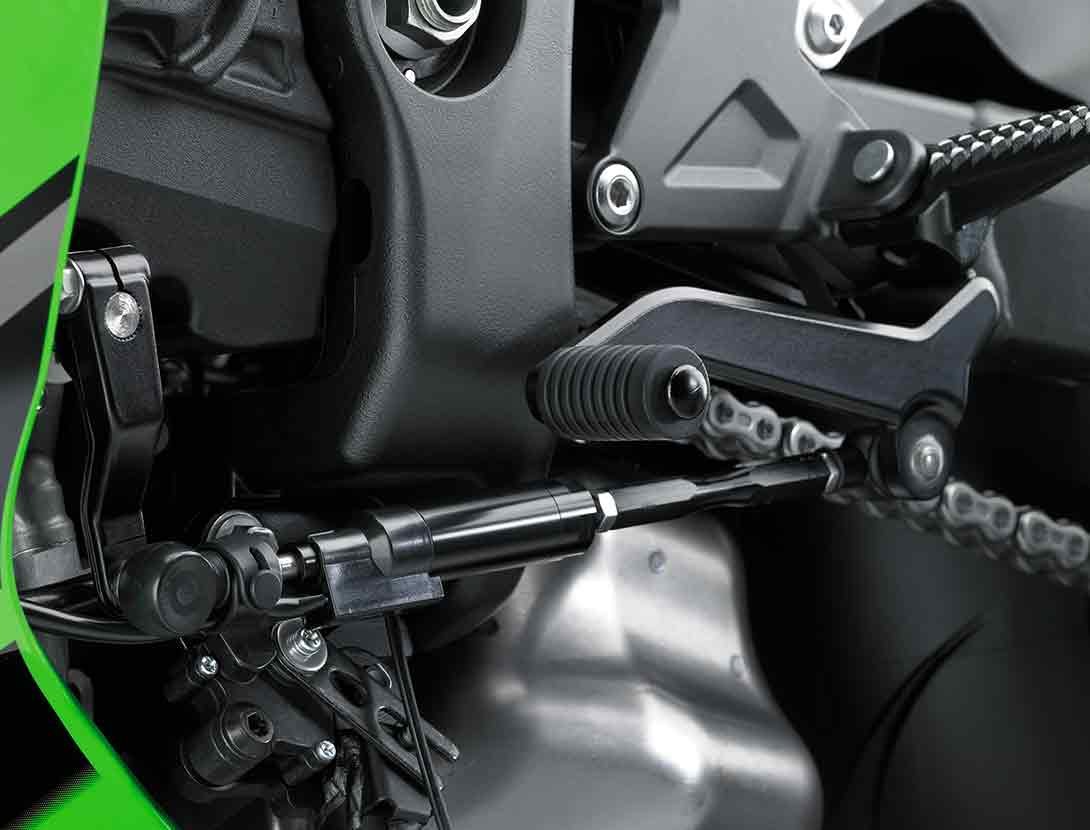
Designed to help riders maximize their acceleration on the track by enabling clutchless upshifts with the throttle fully open, KQS detects that the shift lever has been actuated and sends a signal to the ECU to cut ignition so that the next gear can be engaged without having to use the clutch. On models that offer clutchless downshifts, during deceleration the system automatically controls engine speed so that the next lower gear can be selected without operating the clutch. |
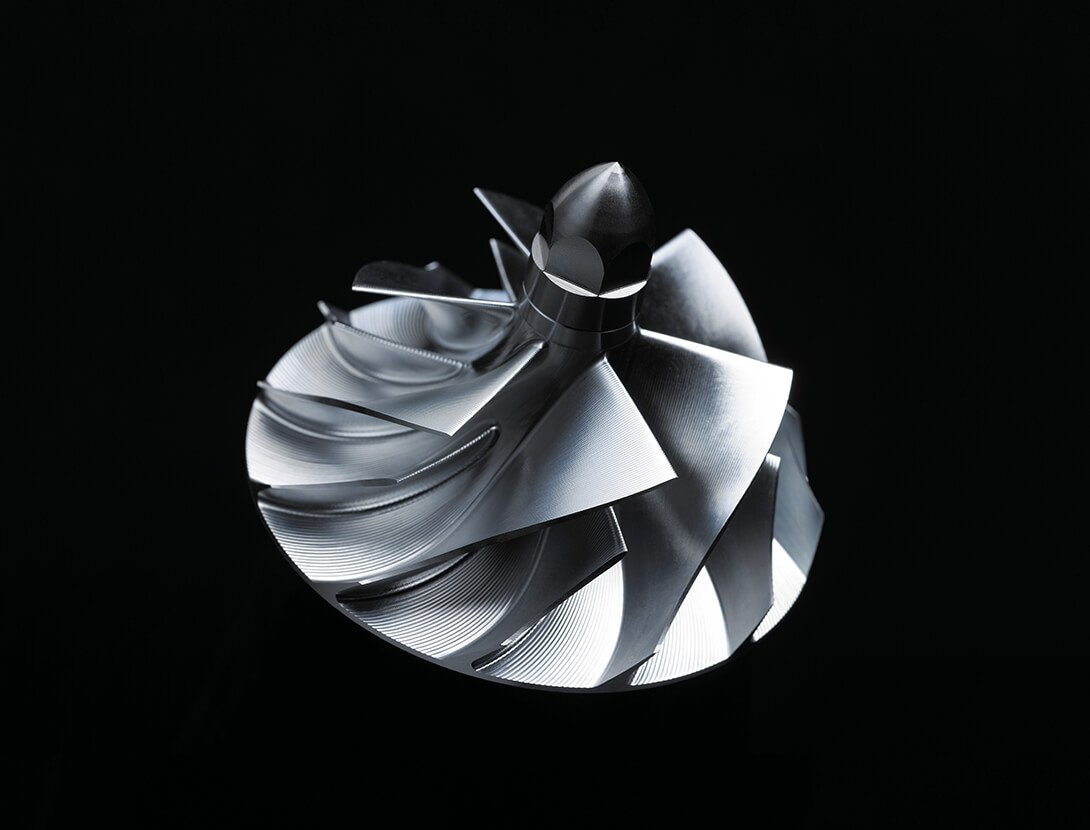
SUPERCHARGED ENGINE
|
IMU-ENHANCED CHASSIS ORIENTATION AWARENESS
|
KIBS (KAWASAKI INTELLIGENT ANTI-LOCK BRAKE SYSTEM)
|
KAWASAKI SPIN
|
SILVER-MIRROR PAINTKawasaki’s high-quality original paint has a highly reflective, glasslike metal appearance. Its debut on the 2015 Ninja H2™ and Ninja H2™R marked its first use on a mass-production vehicle in either the automotive or motorcycle industry. In the shade the paint has the appearance of its base coat color, but once in the sunlight its highly reflective surface takes on the appearance of the surrounding scenery. The stark difference in the way the paint appears in the light and the shade emphasizes the sculpted shape of the bodywork on which it is applied. The highly reflective surface is created by inducing a silver mirror reaction (a chemical reaction between a solution of silver ions and a reducing agent) that forms a layer of pure silver (Ag). This Ag layer is what creates the paint’s glasslike metal appearance. Compared to candy paints, which use aluminum flakes to generate a sparkling effect, the Ag layer appears as a uniform metallic surface. The highly reflective surface is created by inducing a silver mirror reaction (a chemical reaction between a solution of silver ions and a reducing agent) that forms a layer of pure silver (Ag). This Ag layer is what creates the paint’s glasslike metal appearance. Compared to candy paints, which use aluminum flakes to generate a sparkling effect, the Ag layer appears as a uniform metallic surface. |
KIBS (KAWASAKI INTELLIGENT ANTI-LOCK BRAKE SYSTEM)
|
.jpg)
.png)


