
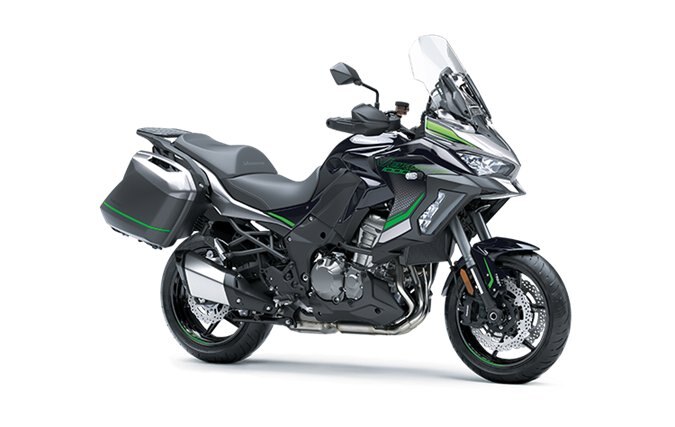


2024 Kawasaki VERSYS 1000 LT SE


| Bike adventures are life’s best adventures. Every day brings opportunity for fresh challenges. Beyond the roads you know lie whole new vistas. Unknown roads are easier and faraway places nearer with the Versys 1000. When Adventure Calls, you and the Versys 1000 have the answer. ANY ROAD. ANY TIME. |
FEATURING
|
ADDITIONAL VEHICLE FEATURES
|
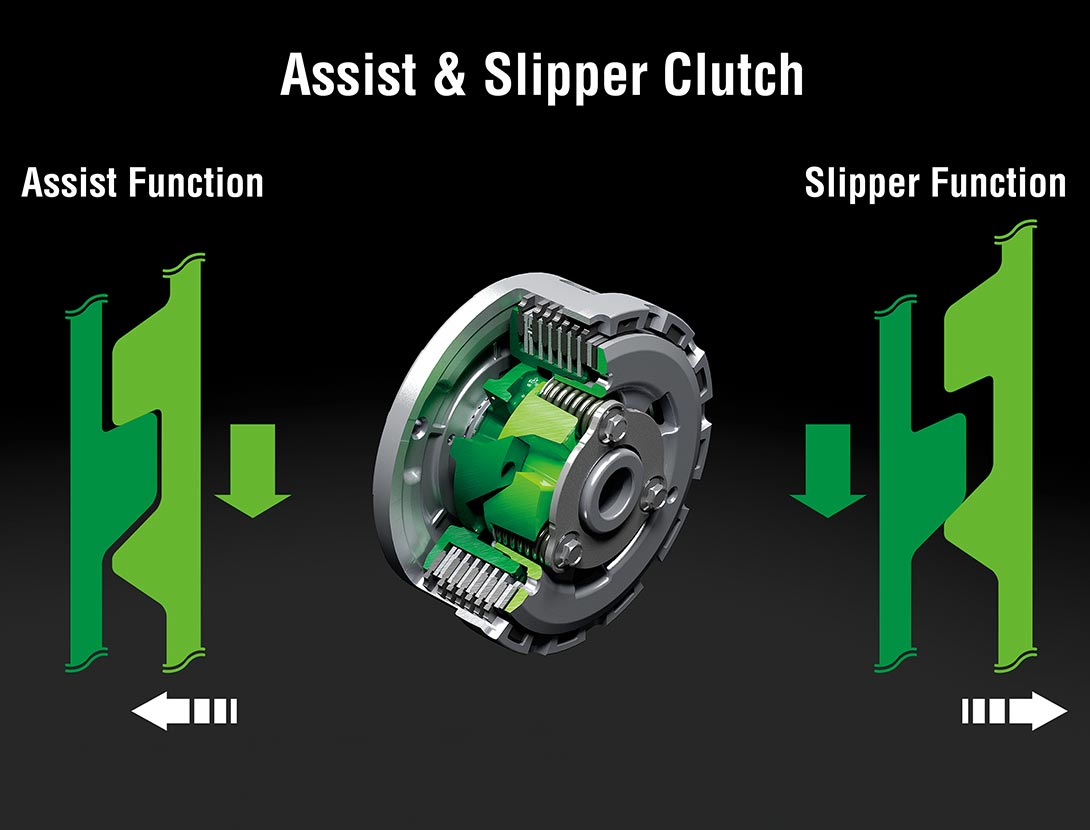
ASSIST & SLIPPER CLUTCH
|
ELECTRONIC CRUISE CONTROLElectronic Cruise Control allows a desired speed (engine rpm) to be maintained with the simple press of a button. Once activated, the rider does not have to constantly apply the throttle. This reduces stress on the right hand when traveling long distances, enabling relaxed cruising and contributing to a high level of riding comfort. |
ELECTRONIC THROTTLE VALVES
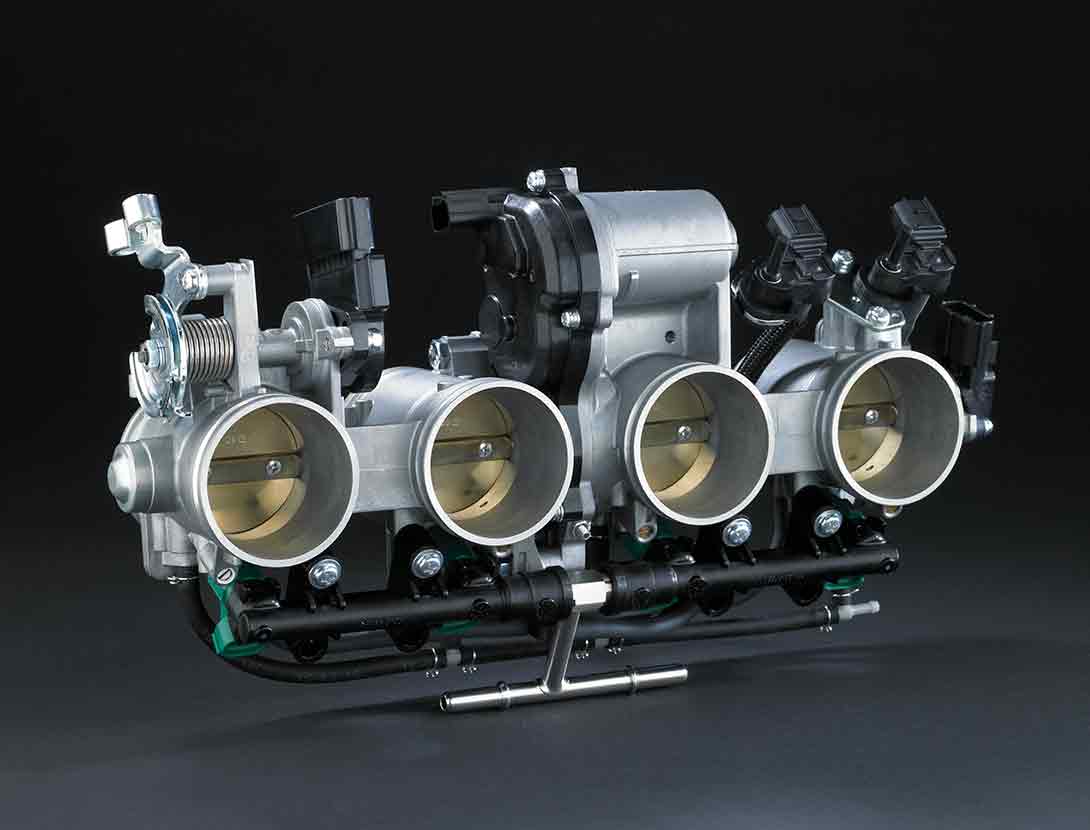
Kawasaki fully electronic throttle actuation system enables the ECU to control the volume of both the fuel (via fuel injectors) and the air (via throttle valves) delivered to the engine. Ideal fuel injection and throttle valve position results in smooth, natural engine response and the ideal engine output. The system also makes a significant contribution to reduced emissions. |
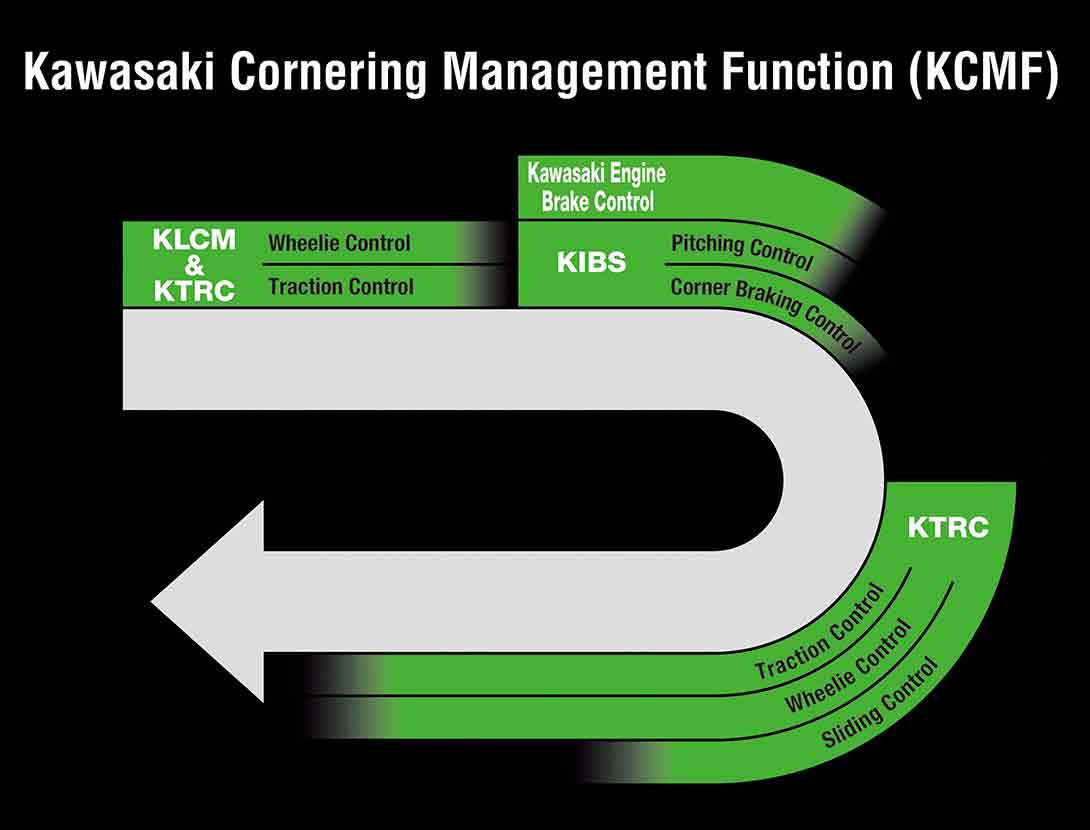
KCMF (KAWASAKI CORNERING MANAGEMENT FUNCTION)
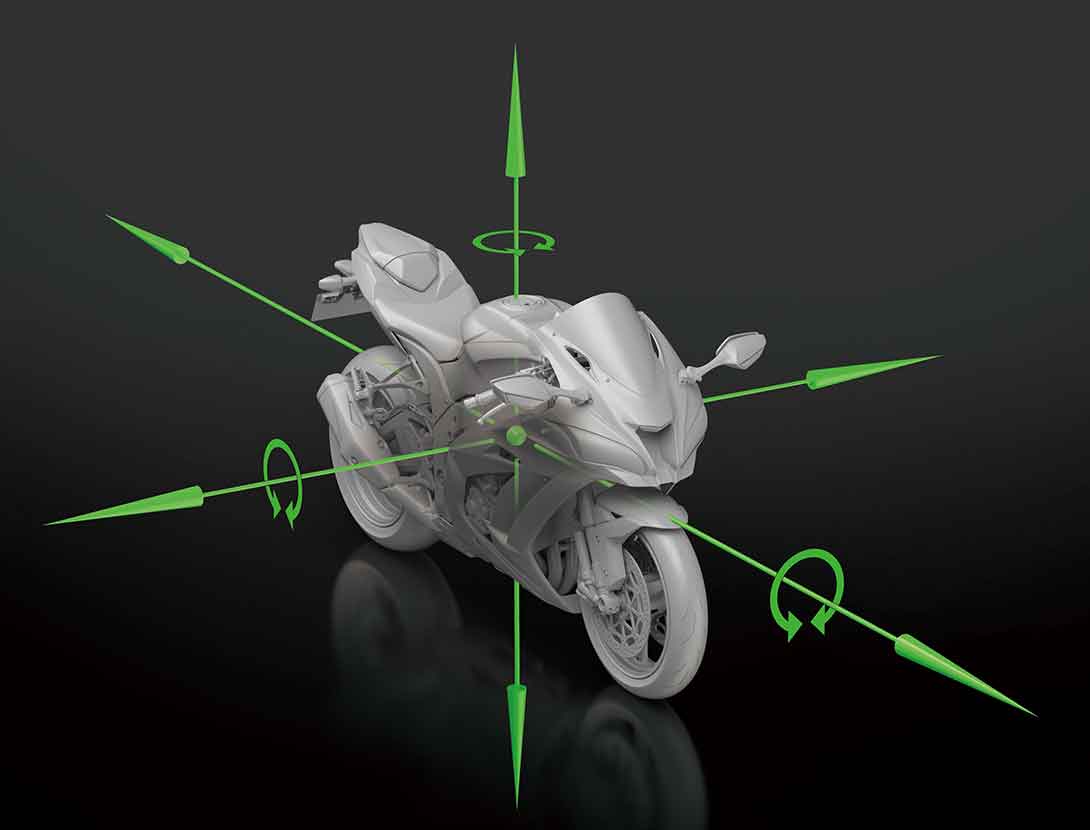
Using the latest evolution of Kawasaki’s advanced modeling software and feedback from a compact IMU (Inertial Measurement Unit) that gives an even clearer real-time picture of chassis orientation, KCMF monitors engine and chassis parameters throughout the corner – from entry, through the apex, to corner exit – modulating brake force and engine power to facilitate smooth transition from acceleration to braking and back again, and to assist riders in tracing their intended line through the corner. The systems that KCMF oversees vary by model, but may include: |
KQS (KAWASAKI QUICK SHIFTER)
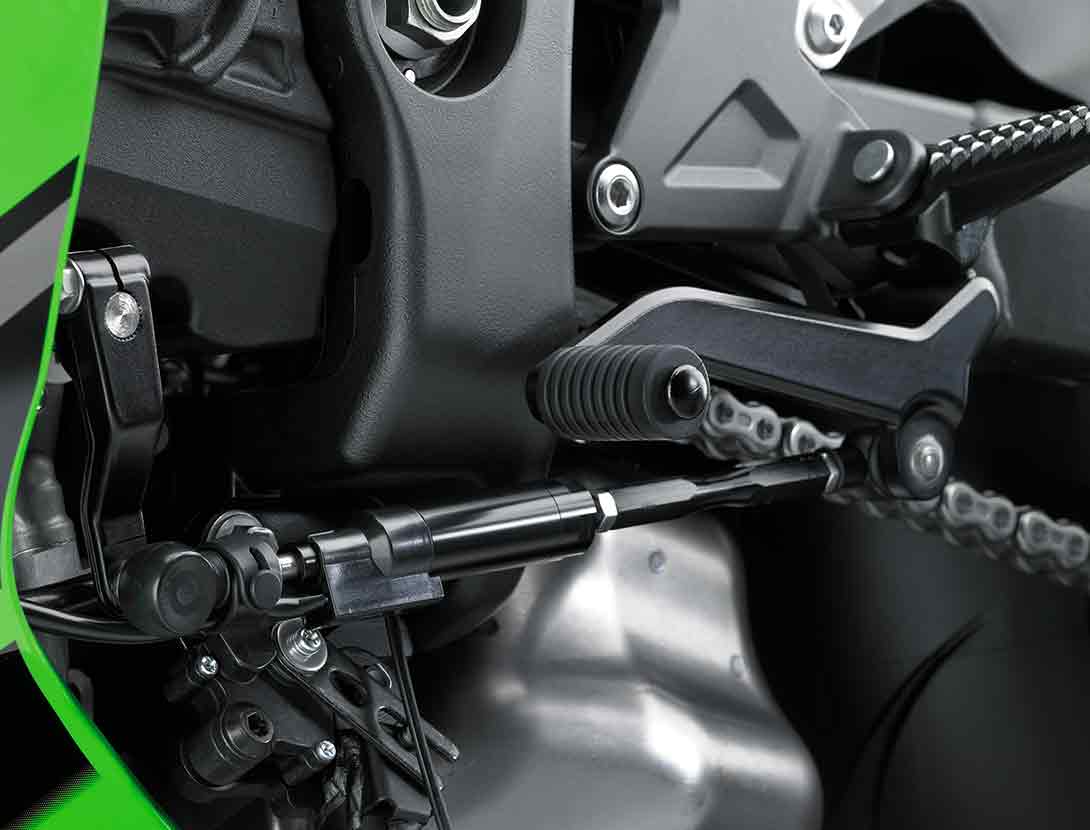
Designed to help riders maximize their acceleration on the track by enabling clutchless upshifts with the throttle fully open, KQS detects that the shift lever has been actuated and sends a signal to the ECU to cut ignition so that the next gear can be engaged without having to use the clutch. On models that offer clutchless downshifts, during deceleration the system automatically controls engine speed so that the next lower gear can be selected without operating the clutch. |
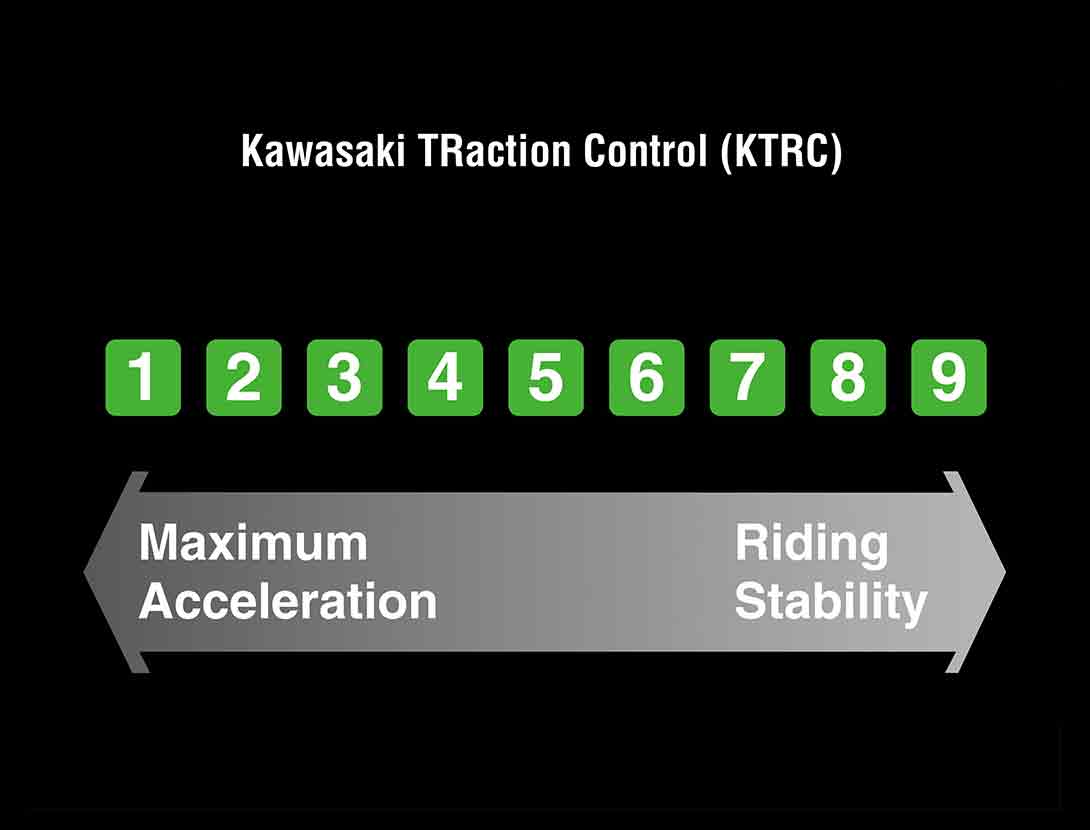
KTRC (KAWASAKI TRACTION CONTROL)
KTRC, Kawasaki's advanced traction control system provides both enhanced sport riding performance and the peace of mind to negotiate slippery surfaces with confidence. Multiple rider-selectable modes (the number of modes varies by model) offer progressively greater levels of intrusion to suit the riding situation and rider preference. |
SMARTPHONE CONNECTIVITY
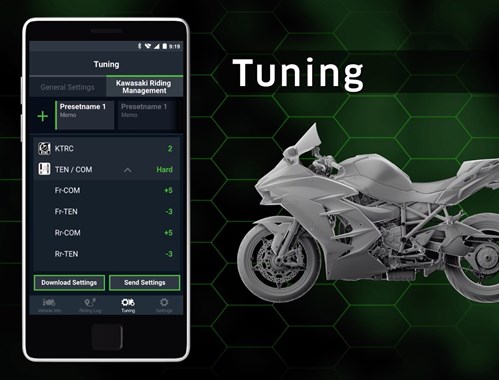
Clever technology enables riders to connect to their motorcycle wirelessly. Using the smartphone application “RIDEOLOGY THE APP,” a number of instrument functions can be accessed, contributing to an enhanced motorcycling experience. Vehicle information (such as the odometer, fuel gauge, maintenance schedule, etc) can be viewed on the smartphone. Riding logs (varies by model, but may include GPS route, gear position, rpm, and other information) can be viewed on the smartphone. When connected, telephone (call, mail) notices are displayed on the instrument panel. Riders can also make changes to their motorcycle’s instrument display settings (preferred units, clock and date setting, etc) via the smartphone. And on certain models, it is even possible to check and adjust vehicle settings (such as Rider Mode, electronic rider support features, and payload settings) using the smartphone. |
POWER MODES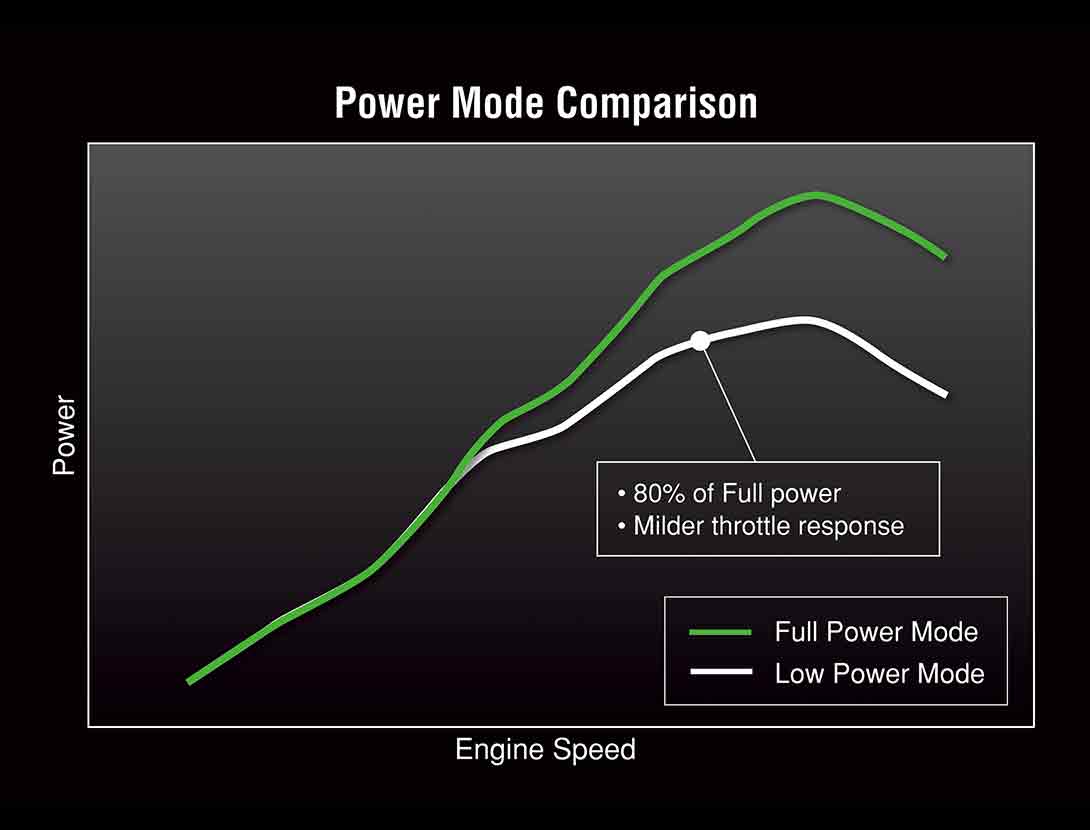 Models equipped with multiple Power Modes offer riders an easily selectable choice of engine power delivery to suit riding conditions or preference. In addition to Full Power mode, one (Low) or two (Middle, Low) alternate mode(s) in which maximum power is limited and throttle response is milder are provided. Models equipped with multiple Power Modes offer riders an easily selectable choice of engine power delivery to suit riding conditions or preference. In addition to Full Power mode, one (Low) or two (Middle, Low) alternate mode(s) in which maximum power is limited and throttle response is milder are provided. |
ECONOMICAL RIDING INDICATOR
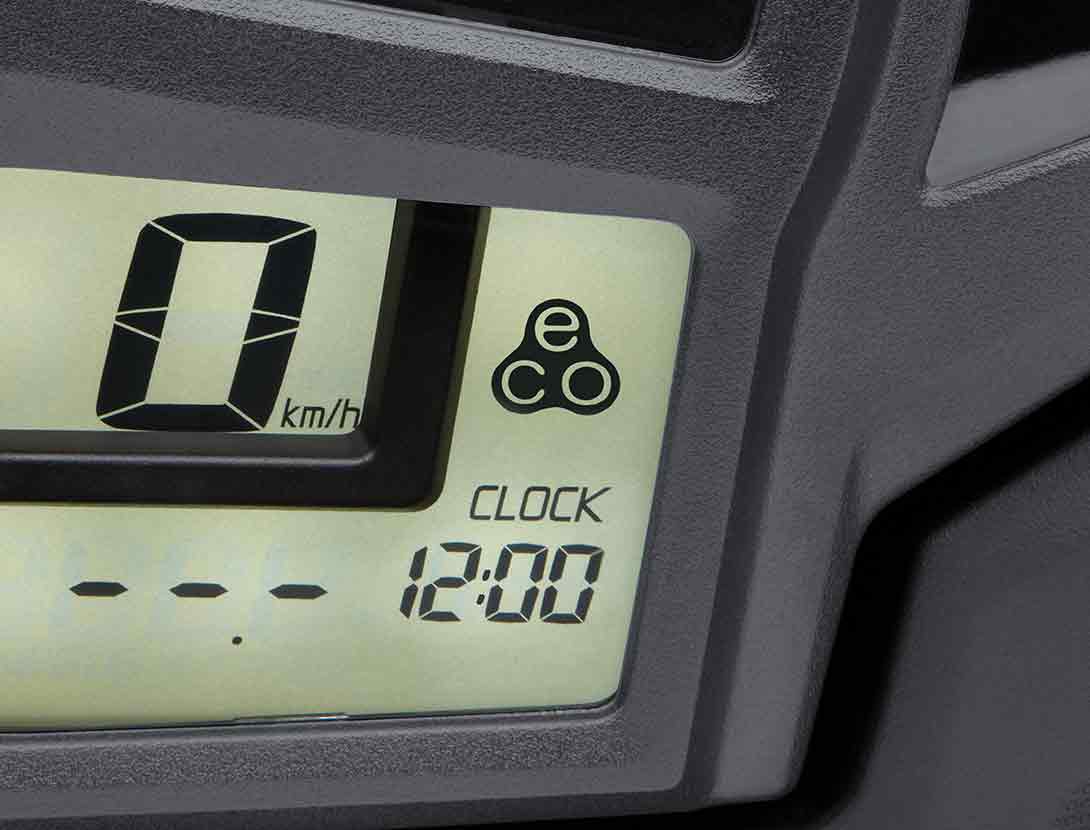
Using high-precision electronic control for engine management, Kawasaki models can achieve a high level of fuel efficiency. However, fuel consumption is greatly affected by throttle use, gear selection, and other elements under the rider's control. The Economical Riding Indicator is a function that indicates when current riding conditions are consuming a low amount of fuel. The system continuously monitors fuel consumption, regardless of vehicle speed, engine speed, throttle position and other riding conditions. When fuel consumption is low for a given speed (i.e. fuel efficiency is high), an "ECO" mark appears on the instrument panel's LCD screen. By riding so that the "ECO" mark remains on, fuel consumption can be reduced. |
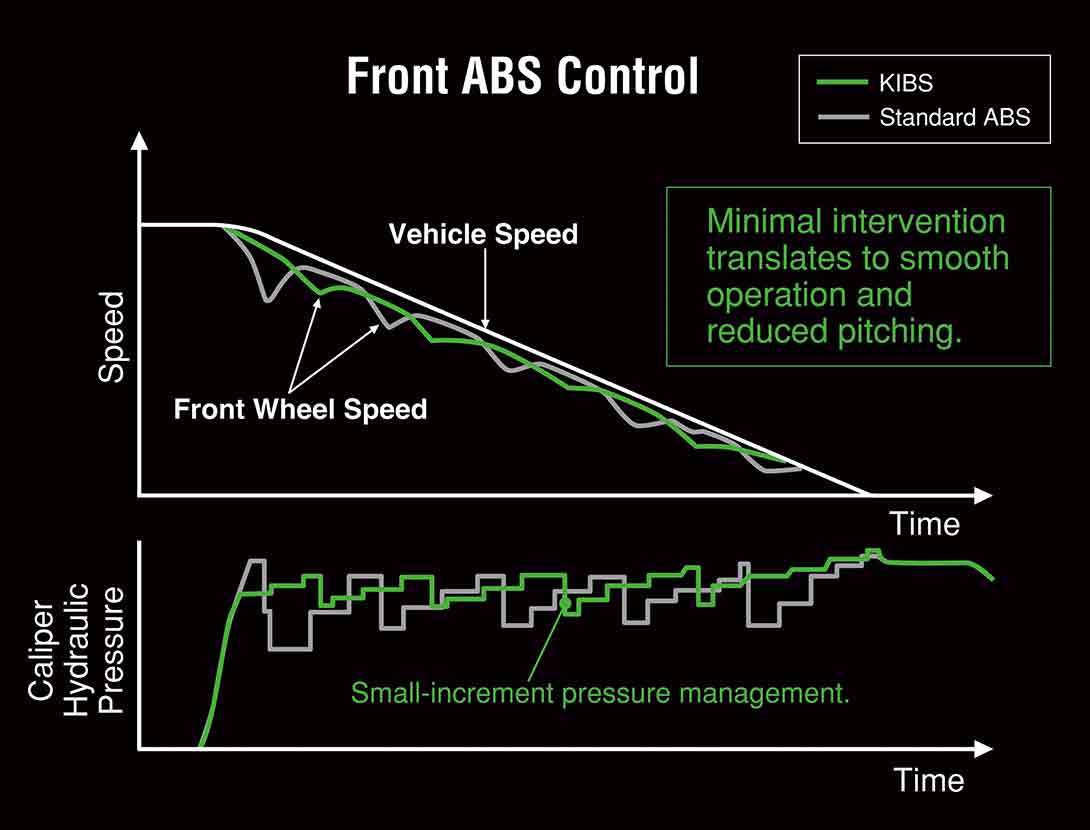
ABS (ANTI-LOCK BRAKE SYSTEM)Kawasaki ABS systems use front and rear wheel sensors to constantly monitor wheel speed. Should information from either of the sensors indicate that wheel lock has occurred, the ABS ECU directs the pump in the ABS unit to modulate brake fluid pressure (releasing and reapplying pressure so that traction can be regained) until normal operation resumes. ABS offers rider reassurance that contributes to greater riding enjoyment. |
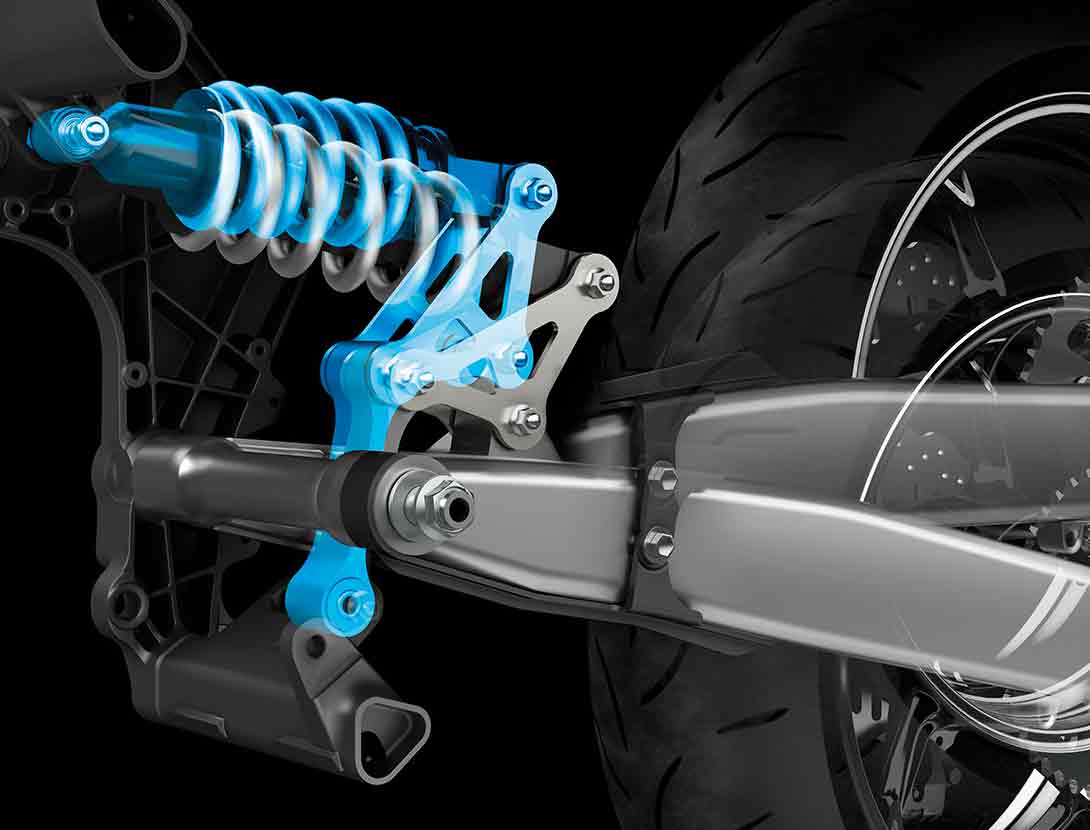
HORIZONTAL BACK-LINK REAR SUSPENSION
|
IMU-ENHANCED CHASSIS ORIENTATION AWARENESS
The strength of Kawasaki cutting-edge electronics has always been the highly sophisticated programming that, using minimal hardware, gives the ECU an accurate real-time picture of what the chassis is doing. Kawasaki proprietary dynamic modeling program makes skillful use of the magic formula tire model as it examines changes in multiple parameters, enabling it to take into account changing road and tire conditions. |
KIBS (KAWASAKI INTELLIGENT ANTI-LOCK BRAKE SYSTEM)
|
KECS (KAWASAKI ELECTRONIC CONTROL SUSPENSION)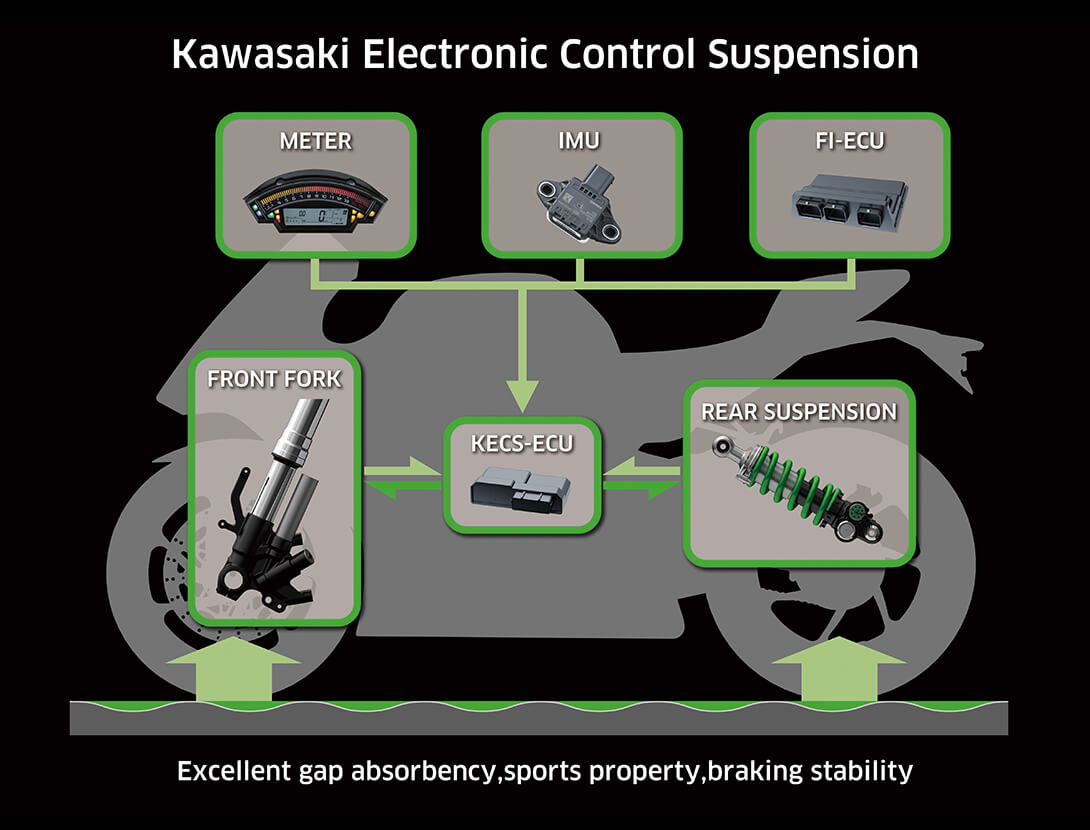
KECS adapts to road and riding conditions in real time, providing the ideal amount of damping called for by electronically adjusting damping to suit vehicle speed and suspension stroke speed. Deceleration is also taken into account, which allows the system to help manage pitching that may occur during braking. Control via solenoid valve with direct actuation enables an extremely quick reaction time, making KECS ideal for sport riding applications, where natural feeling is crucial to feeling at one with the bike. Built-in stroke sensors on both the fork and rear shock provide real-time stroke speed and compression information. Input from the sensor coils to the KECS ECU is complemented by information provided by the IMU (acceleration/deceleration) and the FI ECU (vehicle speed). The KECS ECU then directs current to the solenoids to adjust damping as required by the situation. Selectable modes allow riders to choose softer or firmer base settings. |
Cornering Lights
|
ERGO-FITProper fit is key for rider comfort and control. However, the ideal fit varies from rider to rider, depending on their physical dimensions and riding style. ERGO-FIT is an interface system designed to allow riders to find their ideal riding position. Various points of the chassis interface (the handlebar, footpegs and seat, etc.) can be adjusted through a combination of interchangeable parts and parts with adjustable positions. This enables a wide range of riders to find a riding position that offers both comfort and control. Feeling at one with their machine, they will be able to experience how Kawasaki machines are fun and rewarding to ride. |
.jpg)
.png)


