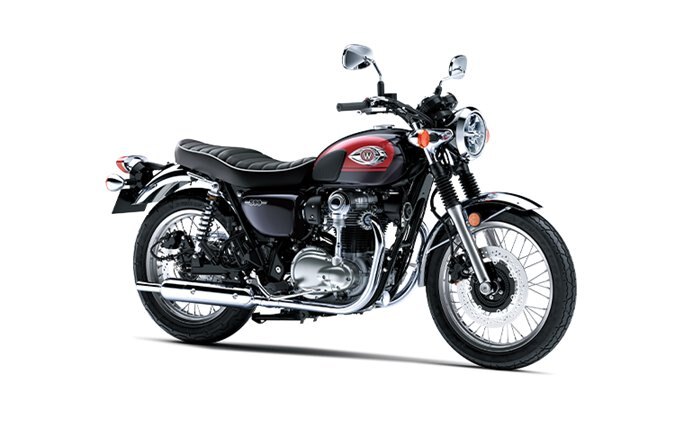
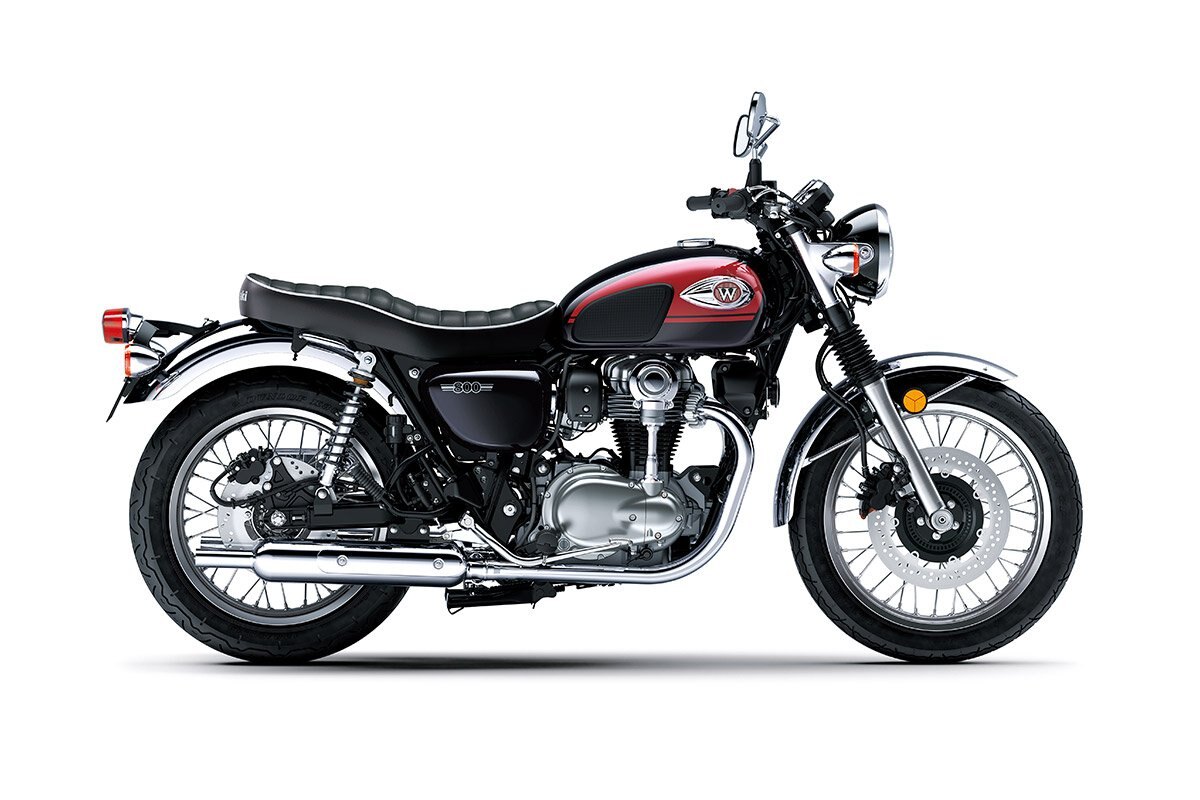
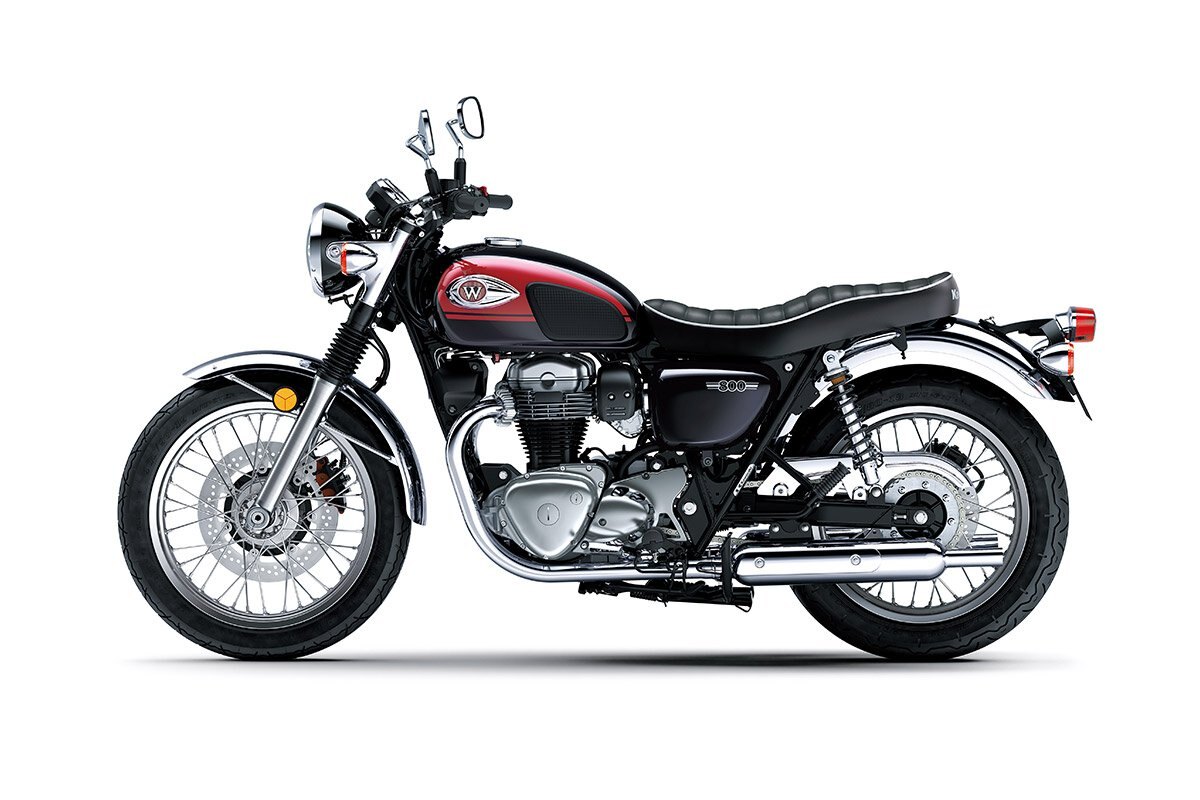
The 1960's spirit runs deep in the Kawasaki W800 retro classic lineup. With every rev, its iconic heritage is unmistakable. Preserving the original classic style, it demands the same respect it did 50 years ago. A true icon never dies, and the Kawasaki W800 is more alive than ever.
FEATURING
773cc VERTICAL-TWIN ENGINE
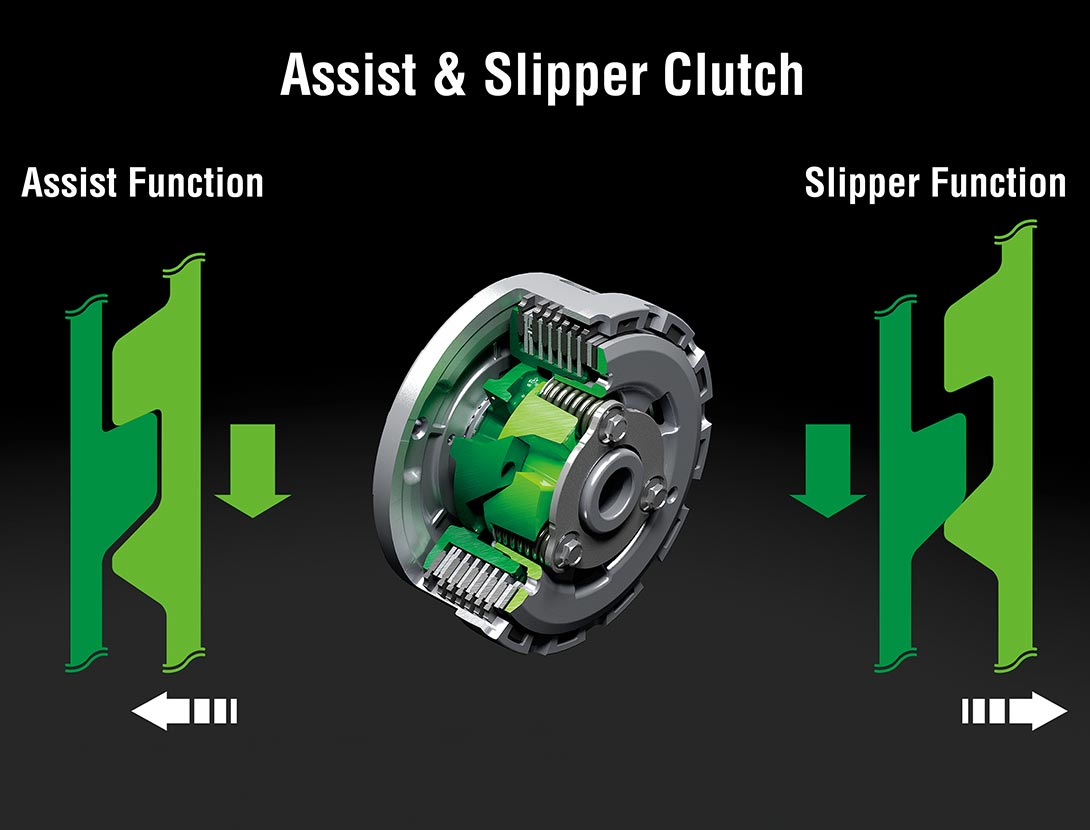
ASSIST & SLIPPER CLUTCH
TRADITIONAL EXHAUST SYSTEM
ADDITIONAL VEHICLE FEATURES
Authentic retro styling
Relaxed handlebar position, more upright than the W800 CAFE model
Based on feedback from racing activities, the Assist & Slipper Clutch uses two types of cams (an assist cam and a slipper cam) to either drive the clutch hub and operating plate together or apart.Under normal operation, the assist cam functions as a self-servo mechanism, pulling the clutch hub and operating plate together to compress the clutch plates. This allows the total clutch spring load to be reduced, resulting in a lighter clutch lever feel when operating the clutch.When excessive engine braking occurs – as a result of quick downshifts (or an accidental downshift) – the slipper cam comes into play, forcing the clutch hub and operating plate apart. This relieves pressure on the clutch plates to reduce back-torque and helps prevent the rear tire from hopping and skidding. This race-style function is particularly useful when sport or track riding.
ABS (ANTI-LOCK BRAKE SYSTEM)
Kawasaki ABS systems use front and rear wheel sensors to constantly monitor wheel speed. Should information from either of the sensors indicate that wheel lock has occurred, the ABS ECU directs the pump in the ABS unit to modulate brake fluid pressure (releasing and reapplying pressure so that traction can be regained) until normal operation resumes. ABS offers rider reassurance that contributes to greater riding enjoyment.
Sound Tuning
Kawasaki has long had a reputation for building great-sounding bikes – a characteristic inherent in the Kawasaki engine architecture – but it is only recently that effort has been put into crafting a specific auditory experience through careful sound tuning of either the intake or exhaust system. Designed specifically to allow riders to enjoy their motorcycles aurally as well as physically, the carefully crafted auditory notes can be the key components of the street riding exhilaration offered by models that have benefitted from sound tuning. Sound tuning can include conducting sound research, designing intake and exhaust system components based on an acoustic test carried out in a sound room, and careful consideration of every detail of a system’s components to ensure a balance of performance and the desired sound.



.jpg)
.png)


